
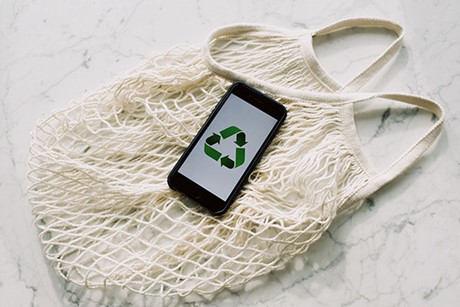
Arrows, material shortcuts and numbers on a package give different information. Some describe the material, others a recycling portion or participation in a collection system. None of these signs should be read as general disposal instructions without testing.
Differentiating material code and recyclability
A material shortcut helps to recognize the material. In plastics you will encounter for example PET, HDPE, PVC, LDPE, PP and PS. Paper and paperboard bear other markings. The code can support sorting, but does not alone say whether a concrete packaging can be recycled in the local process.
Coatings, adhesives, paints and combinations of different materials influence the actual structure. A packaging can therefore require more testing than its simple appearance suggests.
Arrow symbols and percentages
A triangle of arrows is often associated with recycling. Pay attention to what the manufacturer actually says about this. A percentage may relate to a proportion of recycled material, if explained accordingly. It is not automatically the share that can be recycled later.
Reusability and recycling are also different properties. A packaging can be suitable for several applications and must be disposed of at some point. Conversely, a material code does not mean that a container is safe for any reuse.
The collection system is crucial
In Germany, clean paper and cardboard packaging is basically part of the waste paper; yellow ton or yellow sack are provided for many recycled plastic, metal and composite packagings. The basic assignments describe the Federal Environment Agency. Regional collection systems and special cases must be taken into account.
A return system logo is not an automatic confirmation that any packaging will be fully recycled on site. Therefore, look at the material structure and the current tips of your dispenser.
No automatic food release
The material marking is not the sole proof that an object is suitable for food contact. Also a number in the plastic symbol does not answer this question conclusively. For the intended contact, the specific manufacturer’s specifications are decisive. Corresponding standard statements from the Polish original are therefore not taken over.
Biodegradable does not mean biotonne
Biodegradability, industrial compostability and composting in the own garden describe various conditions. A corresponding logo is not a general permission to throw a packaging into the biotonne. Check what the local collection system actually accepts.
A simple procedure in case of uncertainty
- Empty packaging and remove easily separable components.
- Read material specifications and specific manufacturer’s instructions.
- In the wasteABC look for the packaging type of the local disposer.
- Check undamaged packaging before discarding for meaningful further use.
Thus symbols become an orientation without reading more protective, health or environmental properties into them than are actually proven.
Comments
No comments yet. Share your experiences on this topic.