
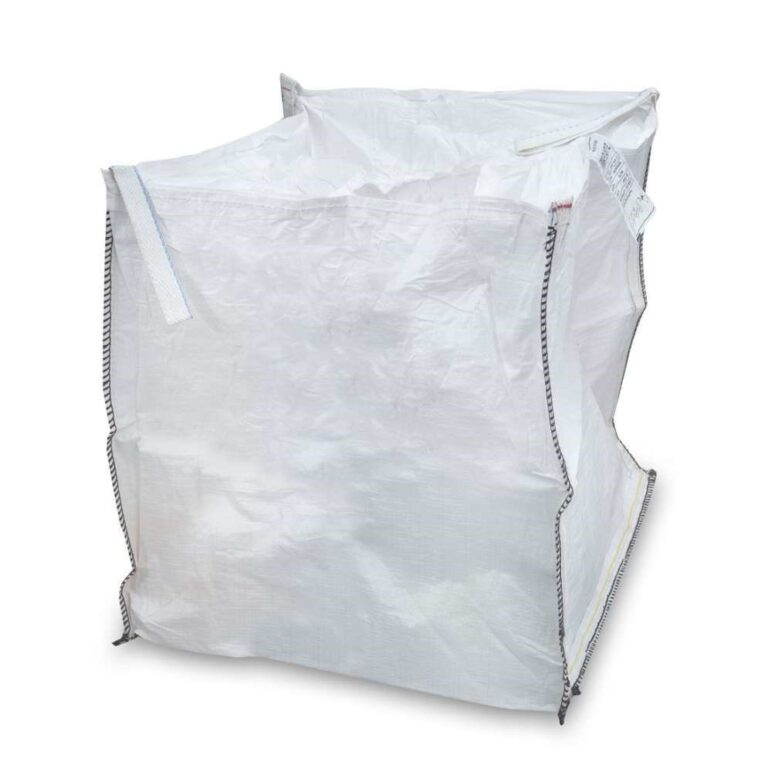
A big bag can absorb a lot of material, but its size and permissible load describe different properties. Both must fit the content for the selection. If you only look at the number of litres, you can choose an unsuitable bag, although the material fits in spatially.
Use the volume as a first orientation
The dimensions help to estimate the space required. For a conceived quadrilateral interior, the length is multiplied by the width and height. If the dimensions are used in metres, the volume is expressed in cubic meters. One cubic meter equals 1.000 Liters.
A computational quadrangle of 0,90 × 0,90 × 1,20 For example, meters have 0,972 cubic metres or 972 Liter. This is a geometric orientation and not a binding filling quantity for any big bag. The actual shape, the closure, the usable filling height and the manufacturer’s specifications may lead to a different usable volume. Therefore, always compare the concrete product description.
Check load capacity separately
The permissible load is not to be read from the volume. Two sacks of similar size can have different load limits. The information for the respective bag, its execution and the intended use are decisive. A clearly visible marking and comprehensible product data are helpful in the selection.
The bulk material itself also changes the planning. Light textiles and heavy mineral material can occupy the same space, but bring with them significantly different weights. The mass can only be reliably assessed with a suitable density indication or by weighing. Do not plan with a flat-rate conversion of litres into kilograms.
Matching material and execution to content
Check whether the big bag is suitable for the intended material. Shape, grain, sharp components and moisture can influence the requirements. Depending on the application, for example, the design of the filling opening and outlet as well as an additional interior lining are relevant. Such equipment may not be accepted solely from a product photo.
Special applications need specifically suitable products. An ordinary bag is not automatically suitable for food, hazardous substances or any waste. For the packaging decision, the confirmed suitability and the corresponding manufacturer’s instructions count. Multiple use may also be envisaged only if the specific implementation is intended for that purpose.
Check before use
Check the bag for damage to tissues, seams and loops. Keep the specified load load and the requirements for filling, storage and handling. The planned filling should be based on the usable volume and the permissible total weight at the same time. A larger container volume means neither a higher load capacity nor that the bag can be filled with any material up to the edge.
Comments
No comments yet. Share your experiences on this topic.