
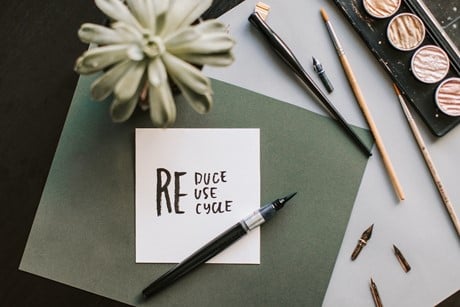
A packaging does not need to become waste immediately after delivery. Many cartons, inlays and upholstery materials can be used further. However, re-use and recycling are different ways: the first one retains the product, the second one processes its material.
Check before the second operation
Check cardboard walls, floor, edges and closures. Moist, torn or strongly compressed cardboard can no longer protect the contents as well as an intact box. Check the suitability for the next product, because a previously light shipment is not proof of sufficient stability for a heavy item.
Old addresses, barcodes and misleading handling instructions must be removed or completely unrecognizable. Check the new closure carefully. An already used adhesive tape is not automatically usable again reliably.
Store suitable materials
- Flatten sturdy cartons and store them dry.
- Sort clean upholstery paper by format.
- Check bubble wrap for intact bubbles and damage.
- Re-use deposits only if they still fit the goods.
- Ready shipping bags with a designated second closure for returns.
An additional layer of adhesive tape makes a structurally damaged box not automatically viable again. Likewise, loose filling should not be the only fixation of a heavy object.
Other use is possible
A carton can be used as a storage box or for sorting small items. Cuts can be used as intermediate layers. Such applications are often referred to as upcycling. It is crucial that an actual task is performed. The mere removal of any packaging residue does not automatically save material.
When the packaging is worn out
Detach easily detachable components. In Germany, clean paper and cardboard packaging is basically part of waste paper, many recycled plastic and composite packaging in yellow ton or yellow sack. The basic instructions can be found at: Federal Environment Agency. Your disposer is responsible for local specificities.
Reduce packaging demand from the very beginning
Choose a box that provides enough space for content and upholstery, but does not create any unnecessarily large cavities. Avoid unnecessary material combinations when a simpler solution achieves the same protection. A general ranking “Paper is always better” or “Reuse is always better” is not enough for any application. The actual material consumption, further use and protection of the product are common.
A documented standard helps in shipping operations: Which used packaging are accepted, how are they tested and what can they be used for? So a good intention becomes a reliable process.
Comments
No comments yet. Share your experiences on this topic.