
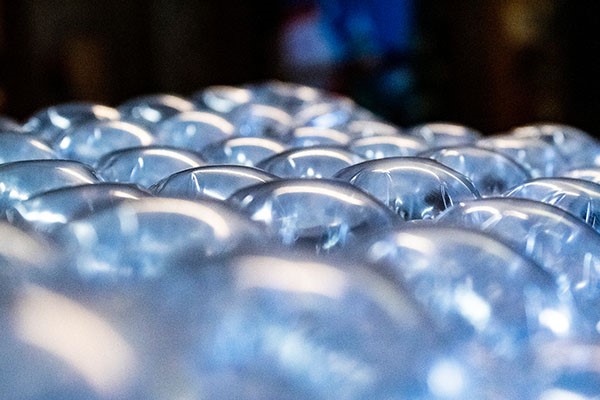
The characteristic pimples of the bubble film consist of enclosed air between connected layers of film. This principle explains why the foil is used as a padding material and why damaged air chambers lose their function. A look at the basic manufacturing process also helps with the selection and handling of finished rolls.
From plastic granulate to foil web
Many bubble wraps are made on the basis of polyethylene. The raw material is present in production as granules. An industrial plant processes the material into thin film webs. Which formulation and process conditions are used depends on the specific product and the manufacturing process. No generally valid temperature can be derived from this for each bubble film.
The material composition influences how a film can be processed later. In addition to classic designs, there are products with further functional layers or special properties. Therefore, check the specific product description if you need antistatic protection, for example. An ordinary transparent film does not meet such additional requirements solely by its appearance.
Form air chambers and connect film layers
During processing, a layer of foil is formed in such a way that recesses or pimples are formed. By connecting to another layer, air chambers are closed. These chambers and the surrounding foil structure form the padding together. The industrial process must therefore not only produce an even web, but also reliably establish the connections between the layers.
A leaky or already compressed chamber cannot perform the same upholstery effect as an intact chamber. For packaging practice, this means: Check the foil before use and replace heavily damaged sections. Used foil can be reused if it is clean and fits the protection requirements of the new application.
Rolls and other packaging will be removed from the web
After production, the film webs are rolled up and cut or further processed depending on the product. In addition to rollware, formats for smaller packaging work or air cushion bags are created. Different pimples and foil structures enable different applications. The appropriate design should be chosen according to the surface, weight and sensitivity of the package.
For sharp-edged products, any number of film layers is not sufficient as a single solution. Protect critical edges separately and coordinate upholstery and outer packaging. A suitable sample package shows better than the pure material thickness whether the chosen structure fits the product.
Use material consciously and collect separately
Cut the amount you need and store leftovers cleanly for suitable later applications. Recycling content and specific environmental characteristics must be identified from reliable information on the respective product. The name bubble wrap alone does not prove a certain recycling rate or an environmental certification. For used packaging film, follow the sorting instructions of your local disposal carrier.
Edited after NEOPAK: The production process of bubble film.
Comments
No comments yet. Share your experiences on this topic.