
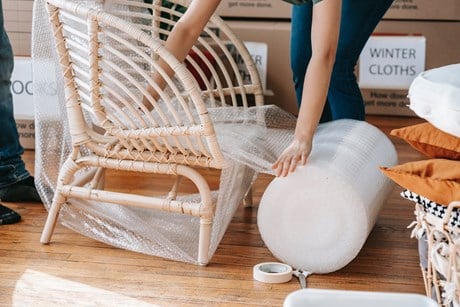
The regular air bubbles make bubble wrap a versatile packaging material. It lies around different shapes, separates surfaces and can absorb light impacts. For a reliable shipping packaging, however, it depends on the appropriate design and the interaction with cardboard, fixation and edge protection.
Rolls, cuttings and bags
Rolls can be cut appropriately and are practical for changing product formats. Perforated versions can facilitate recurring packing processes. Finished air cushion bags save time on small items, if their dimensions actually fit the content. Laminated variants combine the film with other materials; their properties and disposal must be tested separately.
Bubble size and material thickness
Small bubbles adapt well to smaller objects. Large bubbles can create more distance around voluminous items. More material thickness can make the film more resistant. The best choice depends on the weight, shape and sensitivity of the content. Abbreviations alone do not provide a general load or a guaranteed protective effect.
Compare units carefully: Surface weight in g/m², thickness in μm and density are different sizes. In the original article there are partly different units; for the purchase the specific product data apply.
Select special films specifically
Special packaging materials are available for electrostatically sensitive components. The colour of a film is not sufficient proof of its ESDProperties. Check the manufacturer’s data and the required protection structure. Ordinary transparent bubble wrap is not automatically suitable.
Self-adhesive designs can facilitate winding. Test their compatibility with paint, printing, glass coatings or sensitive surfaces. An adhesive that works easily on one material can leave on another residue.
Practical packaging
- Check the article on sharp edges and protruding parts.
- Wrap sensitive pieces separately.
- Protect vulnerable corners and keep distance from the outside wall.
- Fix the padded goods in the carton so that they do not slip.
- Close the carton appropriately and check the finished structure.
When moving, foil is also helpful as a separation layer for glass, ceramics and sensitive surfaces. Documents require additional buckling protection. For heavy objects, a firmer upholstery construction may be required.
No universal isolation
Packaging foil is not easily a tested insulation material, a cooling packaging or a body protection. Applications in hot drinks, structures and joints mentioned in the Polish original are therefore not accepted as a general recommendation. There are intended products for such tasks.
Intact foil can often be reused again. Check bubbles, dirt and mechanical damage beforehand. Honeycomb paper, embossed upholstered paper or other fillers can be an alternative for suitable goods. The protection actually required remains decisive, not only the material label.
Comments
No comments yet. Share your experiences on this topic.