
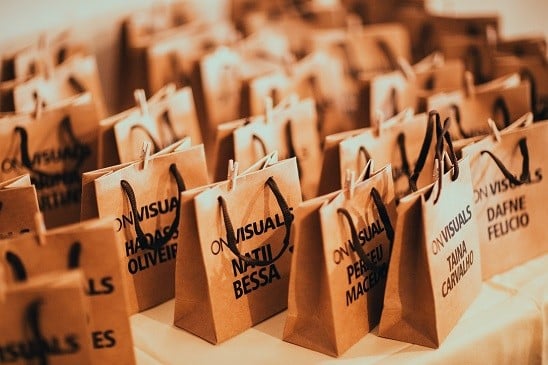
A paper bag looks simple, but its shape, paper quality and workmanship must fit together. The manufacturing process explains why two similar-looking bags can react differently when wearing. The selection therefore counts more than the colour or print.
Plan format, paper and handle
At the beginning is the intended use: Should the bag contain flat documents, light gifts or several products? This results in width, height, floor and side folds. A sufficiently wide floor makes it easier to place the product upright. The format should fit the content so that the bag does not unnecessarily expand or loosely fall around.
In the selection of paper, grammage, stiffness and further processing play a role. A higher grammage alone does not yet prove any specific load capacity. The adhesive seams, the bottom and the connection of the handles also influence the load capacity. Rotated paper handles, flat handles or other designs each require a suitable attachment.
Print paper and process it for pocket shape
Depending on the design, the paper can be printed before the mold. The design takes into account the later position of the front, back, side folds and floor. Important motifs and texts should remain visible after folding. For print production, colours and processes are matched to the material and the desired result.
In a production of the roll, the paper web is processed and continued in a controlled manner. Machines shape the required pocket structure and cut the sections to the specified dimension. Other production methods work with individual sheets of paper. The sequence of steps depends on the bag and the installation used.
Connect seams, floor and handles
When glued, the bag gets its final shape. The connection must match the paper, possible coatings and later load. The bottom is folded and closed; in the case of carrying bags, the handles are added. Reinforcements can distribute the force at the handles. Damaged seams or poorly connected handles cannot be compensated by a strong paper.
Quality control therefore does not only include dimensions and print images. The opening of the bag, the shape of the floor and the processing of the handles are also relevant. For the practical selection you should check the specified product properties and test a bag with the intended content.
Use the finished paper bag correctly
Store paper bags dry and protect them from unnecessary buckling. Distribute the product as evenly as possible on the ground. For sharp edges or moist products, an appropriate additional packaging may be necessary. A brown bag is not automatically made of recycled paper; likewise, disposal possibilities depend on coatings, handle materials and dirt. Concrete material information helps with a conscious selection.
Comments
No comments yet. Share your experiences on this topic.