
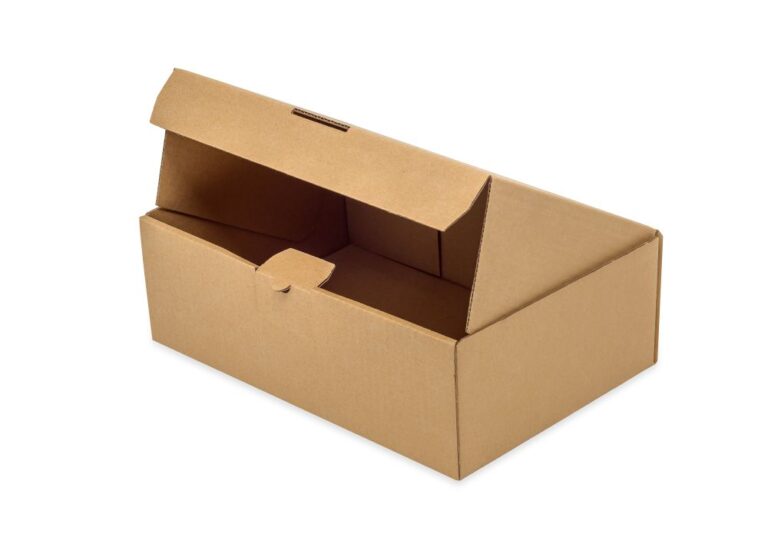
Corrugated board consists of flat paper layers and at least one corrugated paper web. This structure combines a comparatively light material with a spatial structure. However, which packaging makes sense does not depend solely on the visible wave. Paper qualities, layer structure, processing and the concrete load jointly determine whether a carton fits a product.
A fixed structure emerges from paper webs
During production, a paper web is formed into waves and connected to a top layer. Further deck or wave positions can be added. The web created in this way is cut to suitable formats. The interbranch association FEFCO describes the basic steps of corrugated board production and the connection of wave path, decks and subsequent cutting.
The flat corrugated board becomes a box only by further processing. Depending on the design, this includes printing, grooves, cutting, punching and connecting certain edges. A clean cut and matching folding lines help to build the desired shape. Damages to the grooves or poorly closed joints can weaken the later packaging.
Differentiating layer structure and wave type
Single-wave corrugated board has a wave position between layers. In multi-wave versions, several such shaft layers are connected. The terms three, five or seven layers refer to the individual layers of paper; they are not to be equated with the number of waves. A multilayer bodywork can be useful for certain requirements, but is not a flat-rate guarantee for a certain load capacity.
The wave height and the paper used also influence the properties. Fine waves can be suitable for flat packaging, while other structures offer more space for a different structure. For the selection you should use the information on the respective packaging. Its strength cannot be reliably derived from the thickness, colour or weight of an empty carton alone.
Select the packaging as a complete system
Adjust the carton to the weight, shape and sensitivity of the product. In addition to the material, usable internal dimensions, suitable cushions and the closure are decisive. A robust exterior wall helps little if a heavy object is moved unbraked in the interior. Conversely, excessive filler makes a too weak carton no suitable transport packaging.
Store empty cartons dry and avoid permanent pressing. Check reused packaging on wet spots, cracked edges and deformations. A comprehensible material description and suitable test or load specifications are more helpful for the selection than a general designation as particularly strong. The most useful carton is the one whose entire design fits the intended use.
Comments
No comments yet. Share your experiences on this topic.