
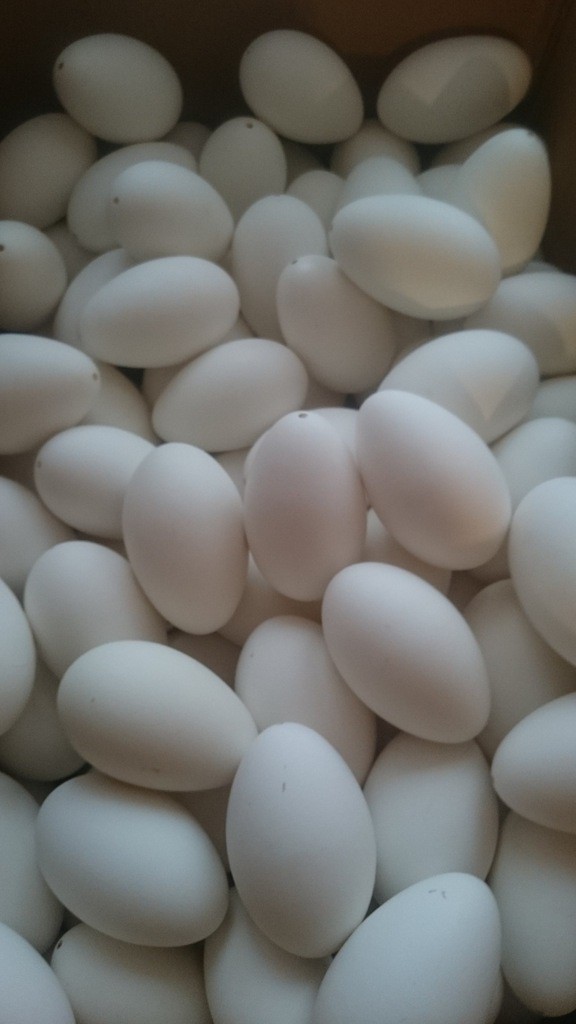
Eggs are sensitive content where breakage protection and product requirements must be considered together. Eggs and hatching eggs place different conditions on transport and storage. Before preparing a packaging, clarify whether the selected transport service accepts the shipment at all and which specifications apply. An ordinary parcel shipment is not automatically suitable for such content.
Determine product and suitable inner packaging
Use clean, matching egg packs with individual compartments. The eggs should be separated from each other and kept without strong pressure. A loose wrapping of several eggs in a common bow does not reliably prevent collisions. In the case of eggs, all materials that come into direct contact with the product must be suitable for this purpose. Damaged or heavily polluted packaging should not be reused.
Check if the inner packaging is closed and the eggs are quiet within their compartments. Improvised fixed bonds can push on the shell. Do not pack so tightly that the lids and eggs burden each other. A hand-over packaging does not automatically have to withstand the same loads as a construction prepared for transport.
Pad the inner packaging from the outer carton
Choose a sufficiently stable outer carton with space for matching upholstery on all sides. The egg packaging must not be in direct contact with the outer wall and should not move freely. Spread the protection evenly instead of just laying a thick layer over the contents. The floor needs as much attention as the sides and the lid area.
Suitable separation layers are important for several inner packagings. Heavy additional goods do not belong together loosely in the same carton. Check the design with an insensitive test setup before using sensitive content. A print with a careful handling notice may be useful, but does not change the acceptance conditions or the mechanical suitability of the packaging.
Fracture protection does not replace suitable transport conditions
For a perishable food, the intended storage and, where appropriate, the necessary cooling must be secured separately. The packaging material alone does not extend the shelf life. Orient yourself to the information on the product and the instructions on food safety. Other technical requirements apply to hatching eggs; good outer packaging does not guarantee any subsequent slippage.
Close the carton only after checking all protective layers and determine the finished weight as well as the outer dimensions. Arrange a suitable transfer and a suitable transport route in advance. This packaging structure is not an undertaking that a certain parcel service will transport eggs. If product requirements or authorised transport remain unclear, clarify them with the competent specialised bodies before dispatch.
Comments
No comments yet. Share your experiences on this topic.